Plants add life to an office. They soften the space and make it more welcoming. But they do not stay tidy without help. They need regular care, and pruning is a key part of that care.
Anyone who looks after pruning in South Dublin gardens understands this well. Trees, hedges, and small plants all need trimming from time to time to stay strong. This guide answers the questions people ask most often, like-
- Why does pruning matter?
- When should it be done?
- How often is enough?
Build a better insight and make an informed decision so your office garden stays healthy and neat year-round. Continue reading.
Why Pruning Matters for Office Areas
Plants grow quickly, and without care, they can turn messy within a matter of months. Pruning is what keeps that growth in check, and in an office setting, it does something more. It provides a feeling of harmony and balance within the area.
Once dead and diseased parts are pruned away, the plant can put its resources elsewhere. New leaves will start growing. The new stems will sprout out. Light will be able to reach areas where there were branches previously shaded from the sun. Over time, this makes the plant stronger and better able to resist disease. The result is not just healthier growth, but a look of care and intention, the kind that reflects well on any professional space.
There is a visible reward here too, and it matters more in an office than most people realise. A neatly pruned garden signals discipline before a single word is spoken. It tells employees, clients, and visitors alike that attention to detail runs through every part of the workplace, not just the desks and meeting rooms.
That sense of order can be quietly motivating. The neatness of the garden will not only provide a feeling of harmony and beauty, but it will also tell people that there is care about their environment, which, in turn, will affect their attitude towards their work. Plants that are healthy are usually long-lived and flower freely.
Mistakes to Avoid
Most pruning mistakes come from good intentions taken too far. Cutting too much at once is common. Some assume more is better, but a plant can go into shock when too much is removed at once, and its growth slows as a result. Timing matters too. A cut made just as new buds are forming can undo weeks of steady growth. The solution is straightforward: learn how each plant behaves through the seasons.
Old or dirty tools cause problems as well, since they can spread disease from one plant to another without warning. Others make the opposite mistake. Some avoid Pruning in Dublin 18, Dublin & Dublin 14; they wrongly think that it may harm the plant. As a result, the branches may become weak and unable to support themselves. It is better not to guess. A plant cut based on assumption, rather than genuine need, tends to end up looking uneven.
The Right Time to Prune in Dublin
Dublin’s climate stays mild and slightly damp for most of the year. Because of this, plants grow at a steady, gentle pace rather than in sudden bursts.
For most trees and bushes, late winter or early spring is the best time, just before new growth begins. Cuts made at this stage heal quickly, since the plant has not yet filled with sap. Flowering plants require a different approach, however. Spring-flowering plants should be cut only after their blooms fade. Summer-flowering plants, by contrast, do well with a late-winter trim.
Trimming plants too late can harm them, so gardeners in Dublin usually do the main pruning in early spring. However, for certain evergreen plants, they wait until mid-spring to give them just a light trim.
Which Plants Need Pruning
Most flowers, hedges, and small trees benefit from a regular trim. Roses, in particular, grow better with careful, thoughtful cuts each year. It is necessary to give due care to the hedges around the perimeter to make sure the edges are neat. The plants that grow quickly, such as ivy and jasmine, can grow faster than expected; therefore, it is better to cut them down before they spread over the walls or windows.
Even potted plants need some care. Removing dead leaves takes only a moment, yet it makes a real difference. Trees with low or crossed branches deserve a check as well, both for appearance and for safety. In short, any plant that grows quickly or flowers with the seasons will need attention at some point.
How Often Pruning Is Needed
Most hedges and bushes need only one significant trim each year, usually in early spring. Fast-growing hedges are the exception; they may need a light trim every few months to stay neat.
Roses benefit from a small check in autumn, in addition to their main spring cut. Trees need less frequent care, and once every year or two is often enough. Because Dublin’s weather remains mild and wet for much of the year, growth tends to be gradual rather than sudden. For this reason, it helps to observe each plant closely rather than follow a fixed schedule, since some plants grow faster than others.
Pruning and Trimming: The Difference
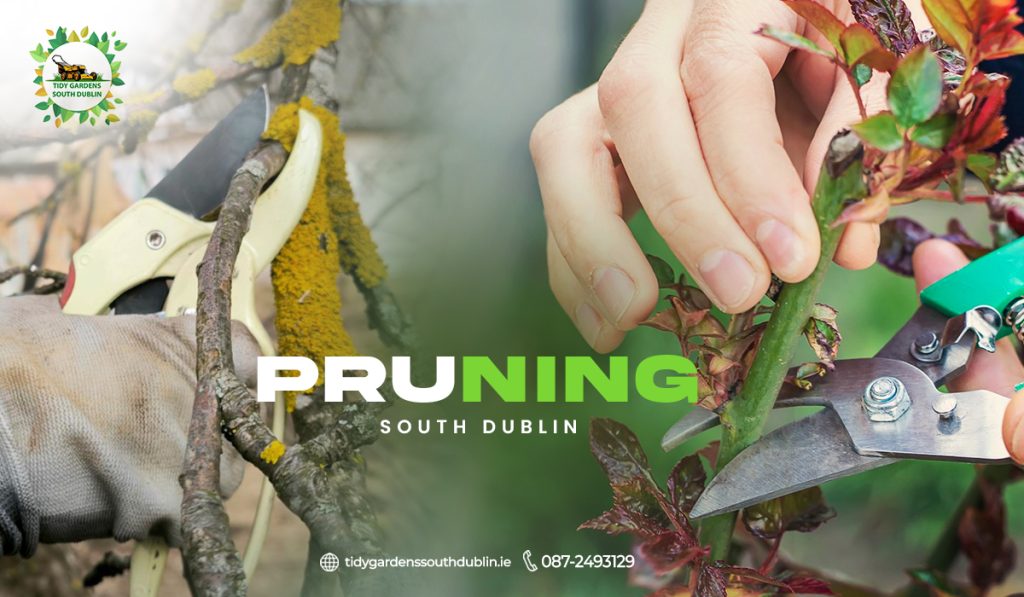
These two terms are often used interchangeably, though they are not the same. Pruning is concerned with health. It involves removing specific branches, whether dead, damaged, or crossed, so the plant can grow stronger overall. It requires more care and attention, since each cut is made close to a bud or joint.
Trimming, on the contrary, is mainly concerned with appearance. It shapes hedges and bushes into neat, even lines, without much regard for the health of individual branches.
Put simply, Pruning in South Dublin cares for a plant from the inside, while trimming improves it on the outside. Most gardens need a measure of both. A hedge can appear neat on the surface, yet still require real pruning beneath.
What Should Be Removed
Dead, damaged, or diseased branches should always be removed first, since they can spread problems to nearby healthy growth.
Branches that cross and rub against one another deserve attention too, as this friction can create small wounds over time. removing Leaves that turn yellow, brown, or spotted helps the plant recover. Unnecessary shoots and parasitic plants like the epiphyte should be removed properly so that they can’t grow there anymore.
As a general principle, anything that blocks light, takes up unnecessary space plus nutrition, or appears unhealthy deserves a closer look.
Simple, Elegant Designs for an Office Garden
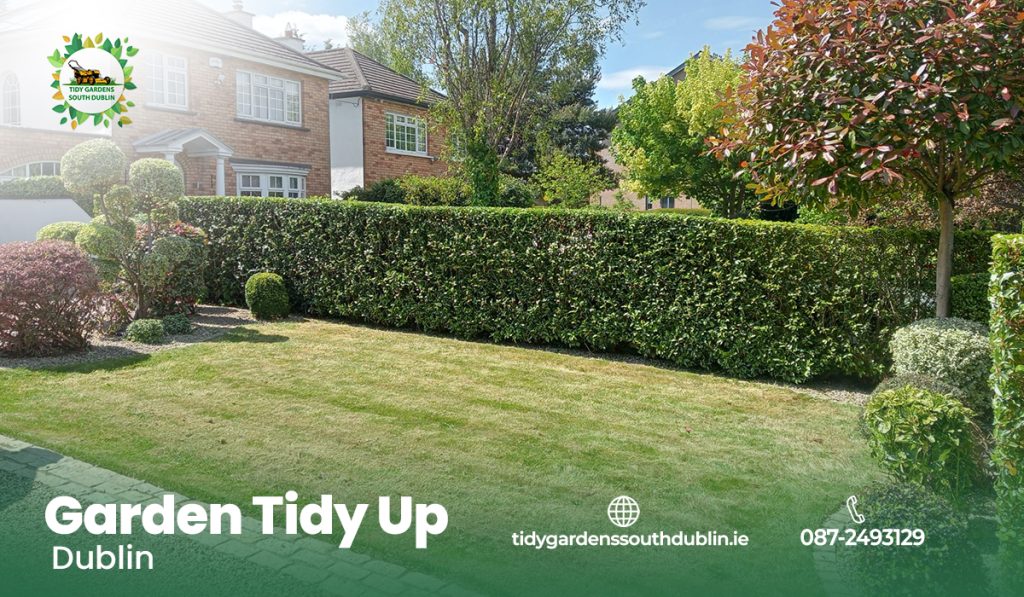
The use of an immaculate, perfectly straight hedge can help make an office garden look instantly smart. Rounded forms like balls or rounded cones provide interest without seeming too contrived.
For a more contemporary feel, plants of varying heights placed near the entrance create a pleasing sense of depth. Straight, even borders work well too, framing walking paths in a clean, orderly manner. Offices around Dublin 14 often pair a single shaped tree with soft, curved hedges near the entrance, and the effect is usually well balanced.
As a rule, simple, well-maintained shapes through perfect Pruning in South Dublin suit office spaces far better than anything elaborate.
Choosing a Professional Pruning Service
Begin with a clear list of the work to be carried out. Both parties should understand exactly which plants and tasks are covered, so there is no confusion later.
Charges should be made clear and should cover labour costs, tool usage, and disposal fees. It could be helpful to find out about the pruner’s experience in pruning plants that are similar to yours. Ask about insurance as well, in case of accidental damage during the work.
A written visit schedule helps keep expectations clear throughout the year. It is also worth discussing cancellation terms and whether any guarantee applies to plant health. Finally, reading past reviews takes little time, yet it can prevent considerable difficulty later on.
Ready for a Tidier, Healthier Office Garden
A well-kept garden reflects the care behind an entire office, and it is often the first thing visitors notice upon arrival. If your hedges have grown wild or your plants are overdue for attention, a trusted team can restore that healthy, well-kept look without difficulty. We are Tidy Gardens South Dublin; we bring years of hands-on experience with local plants, Dublin’s weather, and thoughtful design. All these make us well suited to everything covered in this guide so far. Get in touch with us today, and make your office ambience feel more aesthetically disciplined.